


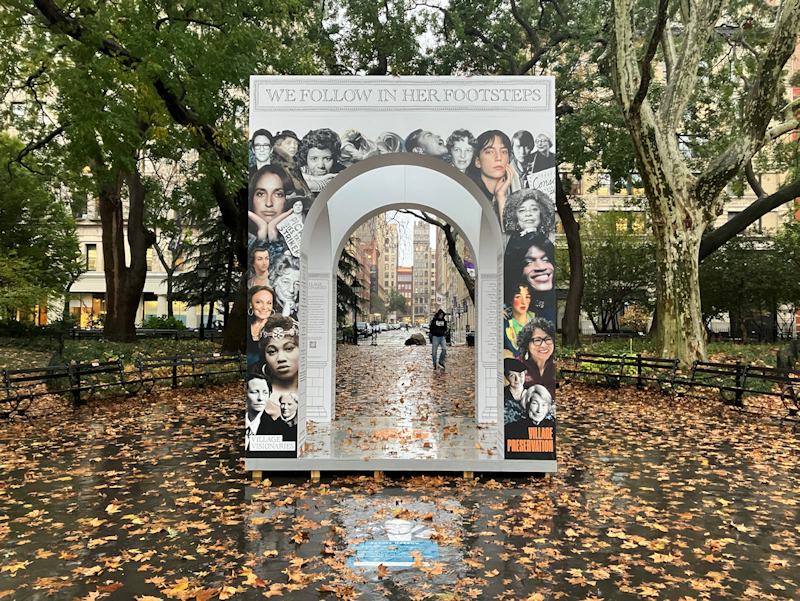
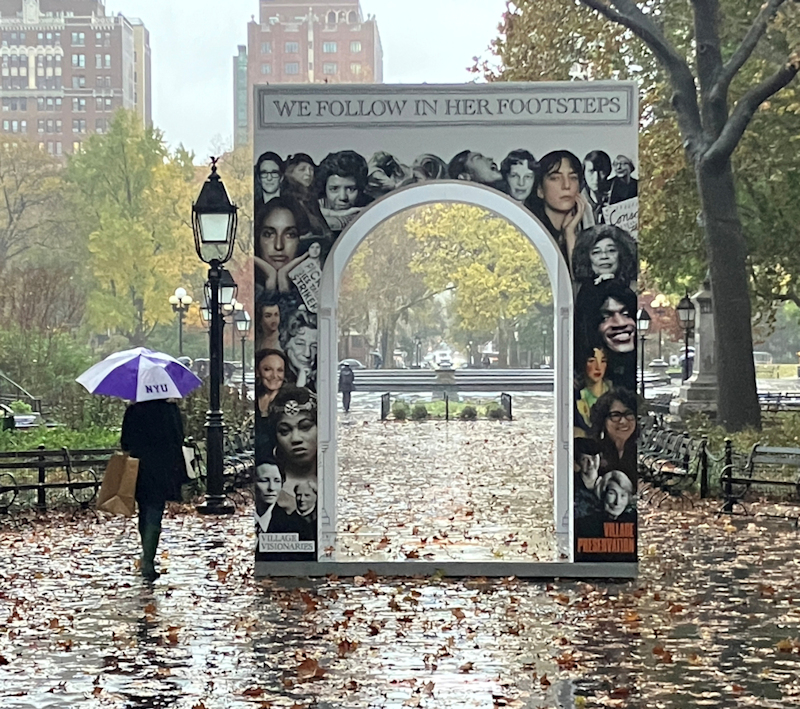
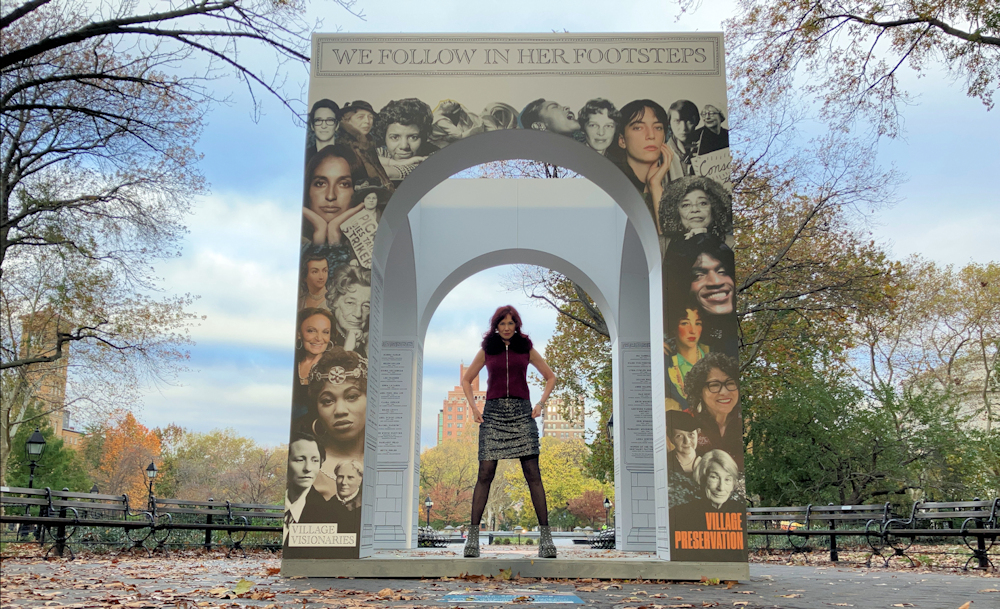
“We Stand” is a new 12-foot arch in Washington Square Park that celebrates the remarkable women of the Village who have impacted our nation over the past 250 years.
Village Preservation has launched the public art and history exhibition to celebrate dozens of women visionaries and the impact that they have had from 1776 to today. And the best part is that these women all lived in the Village, blazing trails that radiated throughout America and beyond. The exhibit will be on display until March 2027, spanning from America’s 250th anniversary to Women’s History Month.
This history is rich indeed, and I am so inspired by the 100+ individuals honored in the exhibit, which includes many women who have impacted me personally from my teens until now. Women like Betty Friedan (“The Feminine Mystique”), Mary Oliver (“Tell me, what is it you plan to do with your one wild and precious life?”), Deborah Harry (“Heart of Glass” and the iconic “Parallel Lines” album cover and music), Helen Keller (deafblind author, disability rights advocate, and lecturer), and Anna Wintour (“Vogue,” the Met Gala and Costume Center at the Met, sunglasses, bare legs, and that power bob!).
And women I only learned about after moving to New York, like the 146 garment workers who died tragically in the Triangle Shirtwaist Factory fire of 1911. This horrific tragedy resulted in a pivotal shift in American labor law, as well as building code regulations and workplace safety laws.
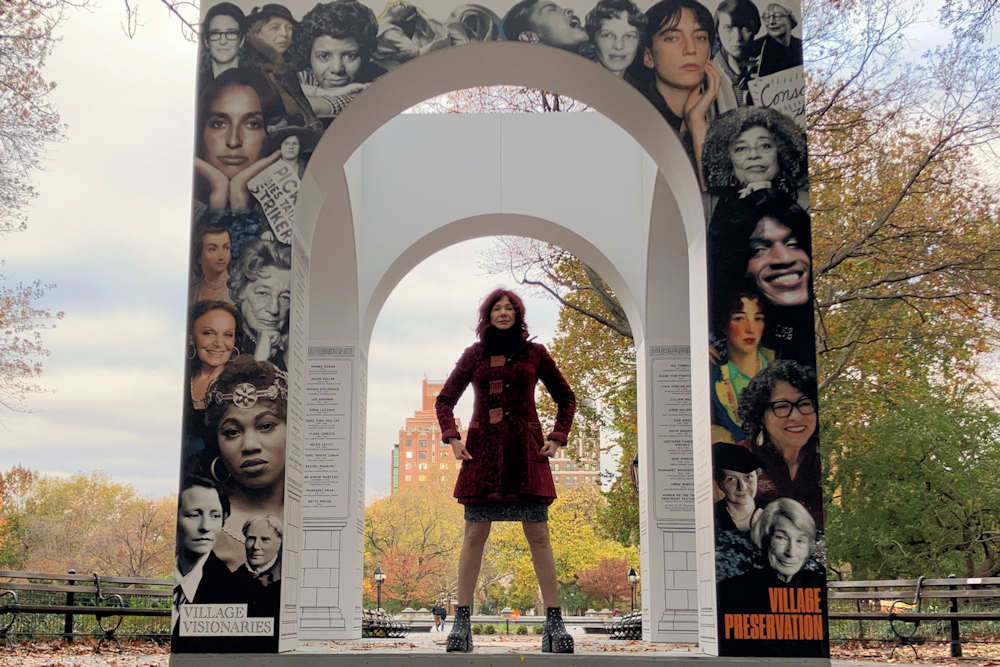
The beautiful thing about New York is that the history here is bottomless. The We Stand exhibit in Washington Square Park introduces us to dozens of inspiring women and the stories of their impact on the world.
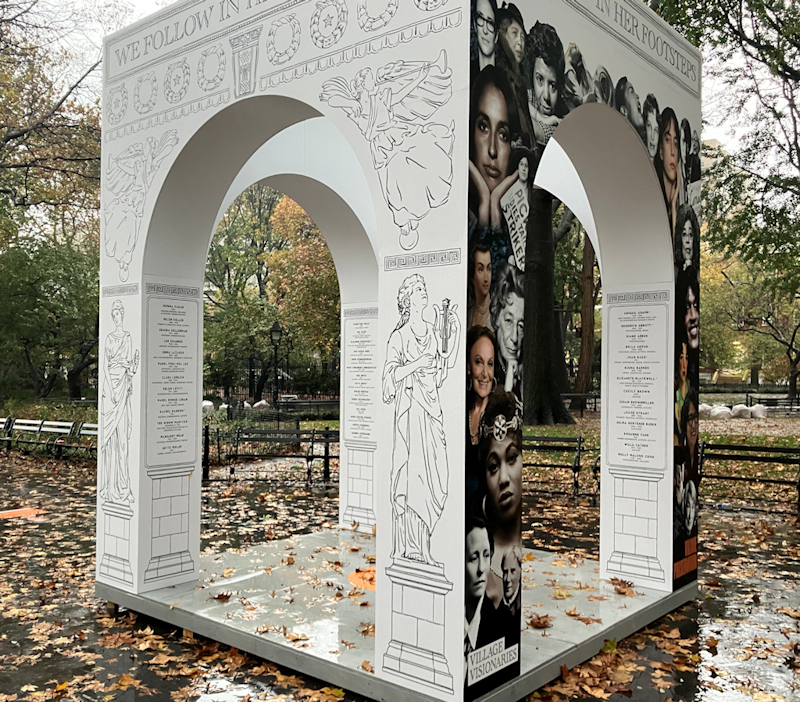
The Women’s Arch structure is a graceful classical Grecian pergola that riffs on the park’s iconic Washington Arch, which represents hope, enlightenment, and freedom. The Women’s Arch honors 22 individuals and the Triangle Shirtwaist Factory women pictorially, with photographs on the paths and on the columns of the arch. The names on the columns also honor another 70 women Village Visionaries from every sphere of life: music, literature, politics, activism, government, fashion, and much more. See Village Preservation’s webpage for the “We Stand” exhibit to learn more about the fascinating contributions of this incredible cohort of visionaries.
Here are details about three of the Village Visionaries, to give you a taste of why this exhibit is so inspiring and important.
Abigail Adams
Abigail Adams, first second lady and second first lady of the United States, advocated for women’s rights, abolition, public education, and liberty for all. Her influence is revealed through her correspondence with her husband during their 54-year marriage, which chronicled private family life and the birth of the nation. She is famously remembered for advising her husband, John Adams, as he was framing the laws of the new republic: “Remember the ladies, and be more generous and favourable to them than your ancestors. Do not put such unlimited power into the hands of the Husbands.”
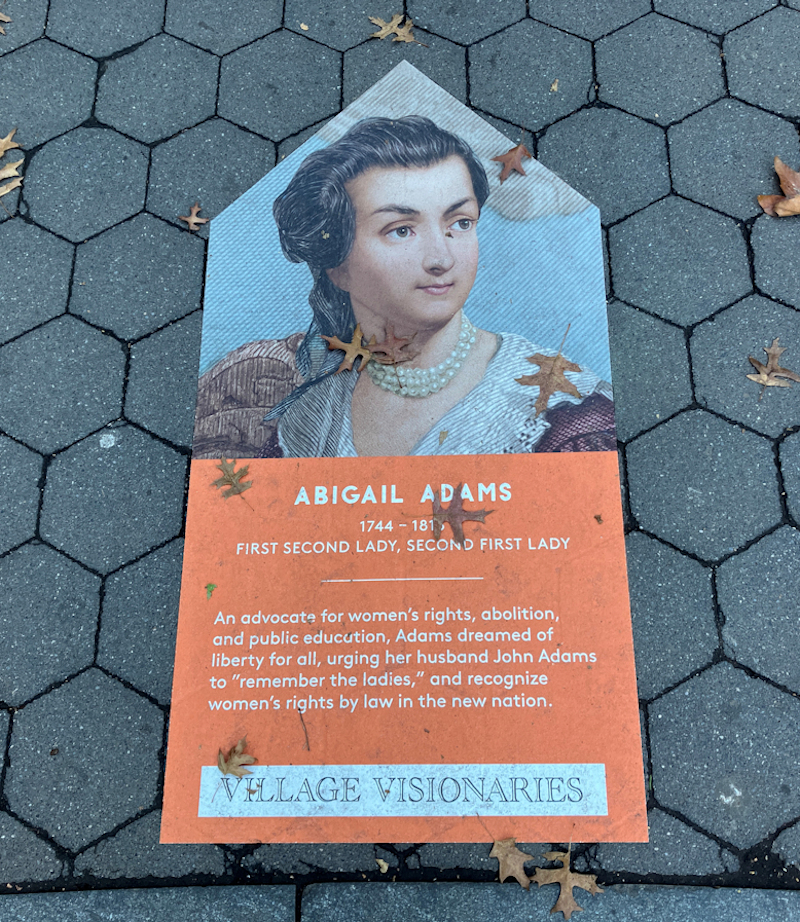
Greenwich Village was her home. New York City was designated the nation’s capitol after the Revolutionary War, and Richmond Hill—an estate located north of lower Manhattan that would have been bordered by the Village’s present-day Varick, MacDougal, Charlton, and VanDam Streets—was the vice-presidential mansion for John Adams, the first person in the office (which he held from 1789 to 1794, when he took office as the second president).
Lorraine Hansberry
Lorraine Hansberry was a playwright, author, and activist. Her ground-breaking play, “A Raisin in the Sun,” was the first play by a black female playwright to be produced on Broadway, where it debuted in 1959. New York Drama Critics’ Circle named it the best play of the year, and it is now listed among the best plays of all time. It introduced details of black life to Broadway audiences, and was the first play that drew a large number of black people. In 1983, Frank Rich of The New York Times said the play changed American theater forever. It has retained its salience, and Claire Brennan of The Guardian said the power and craft of Hansberry’s writing make “A Raisin in the Sun” as moving today as it was then. The play has been reproduced in many revivals and on film; the 2004 Broadway revival won two Tony awards.
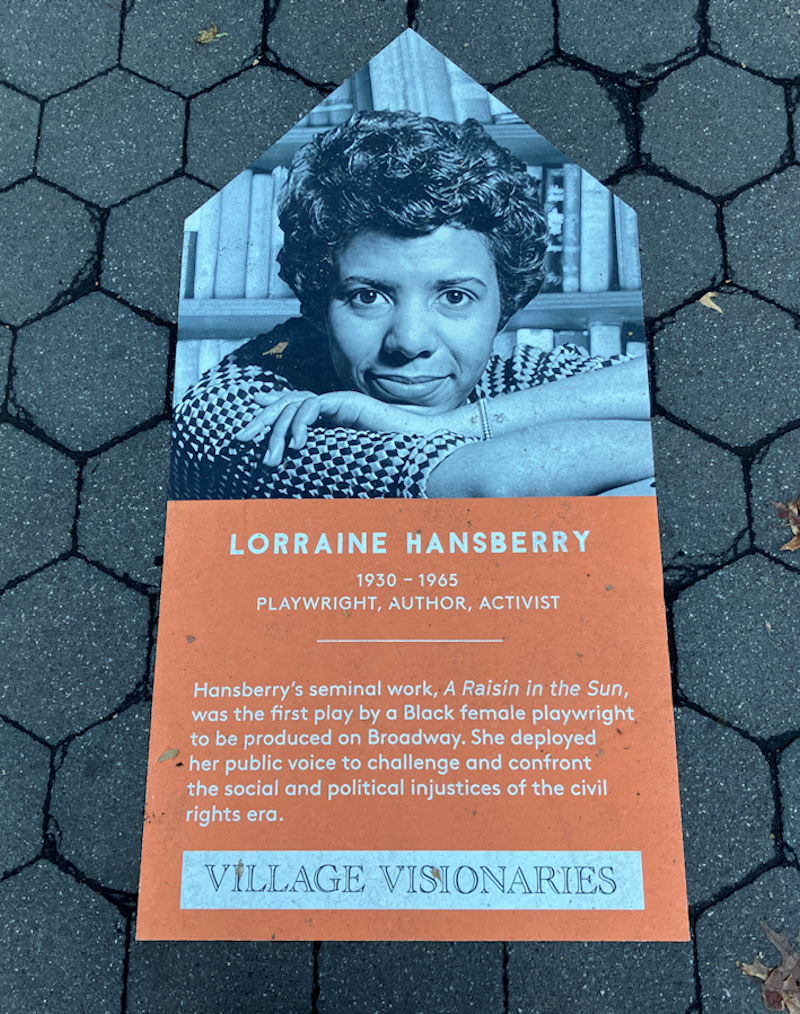
The experiences in Hansberry’s play were based on a desegregation lawsuit in which her father, Carl Hansberry, fought and won the right to be heard at the Supreme Court under the Fourteenth Amendment to the US Constitution, which guarantees equal protection under the law at all levels of government. In an ironic twist, the husband of her father’s legal opponent later sold Mr. Hansberry a house in a white neighborhood of Chicago. Ms. Hansberry grew up there and experienced mobs of segregationists targeting their home. Ms. Hansberry bought 122 Waverly Place in Greenwich Village in 1960 with proceeds from “A Raisin in the Sun.” She met her partner Dorothy Secules there, and they lived together until Hansberry’s premature death from pancreatic cancer at the age of 34.
Diane von Furstenberg
Diane von Furstenberg (DVF) is known for her visionary “wrap dress,” which was a symbol of women’s liberation and self-determination in the 1970s. Cinching at the waist, and ending just above the knee, the dress was universally flattering and a staple in every New York woman’s closet. It’s having another moment today, and my friends are all about it! But did you know that former Studio 54 mainstay DVF has played a critical role in neighborhood revitalization, including the High Line and Little Island?
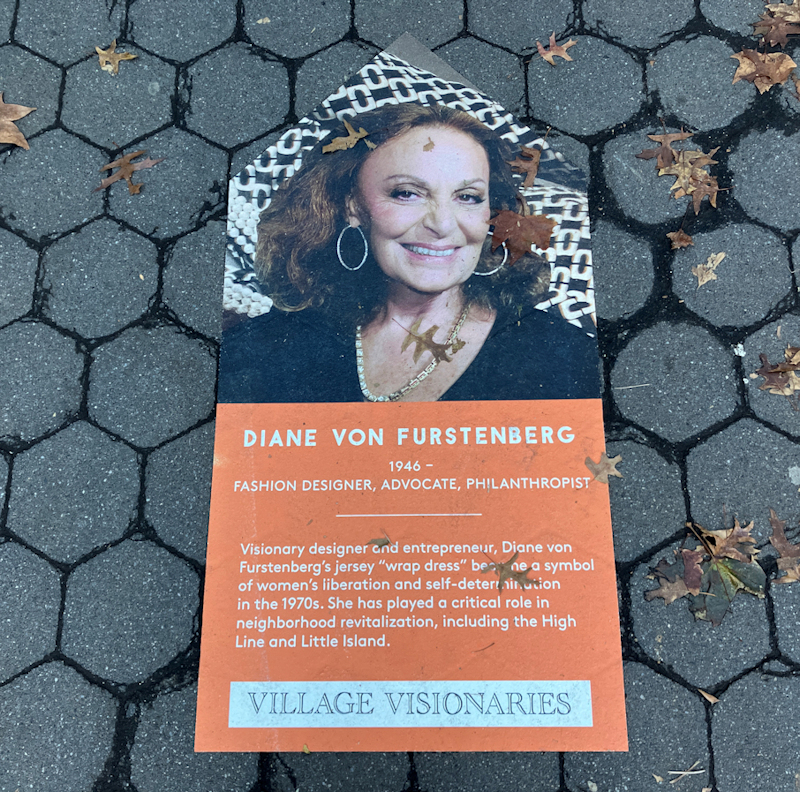
It’s true, DVF is a preservation advocate and philanthropist with deep ties in the West Village. In the late 90s she converted a former factory and New York Police Department horse stable at 385 West 12th Street in the West Village to her studio, showroom, and personal residence (sold in 2004 for $23 million). In the early 2000s, she moved her studio and showroom to 440-442 West 14th Street. In 2011, after High Line co-founders Joshua David and Robert Hammond approached her studio for a fundraiser, von Furstenberg helped rally support and push for historical preservation of the abandoned elevated railway against real estate development pressure. Together with her second husband, media mogul Barry Diller, von Furstenberg pledged $20 million to Friends of the High Line—at that time the largest donation to a NYC park. They later donated more than $260 million to construct Little Island (first known as Diller Island).
Exhibition Notes
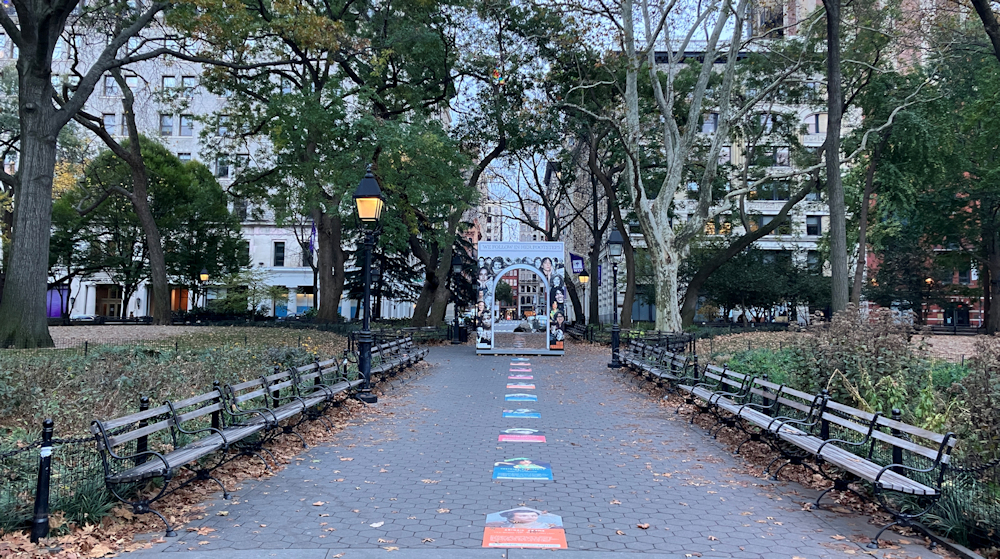
You have until March to see the Women’s Arch, but why wait? As a design note, I wonder how well the women’s photographs on the pathways leading to the arch will wear. See the exhibit soon to get the optimal visual impact of following in their footsteps by walking beside their faces and learning about the incredible contributions these trailblazers made through being their unique selves.
Style Notes
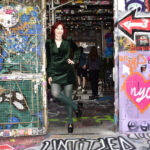
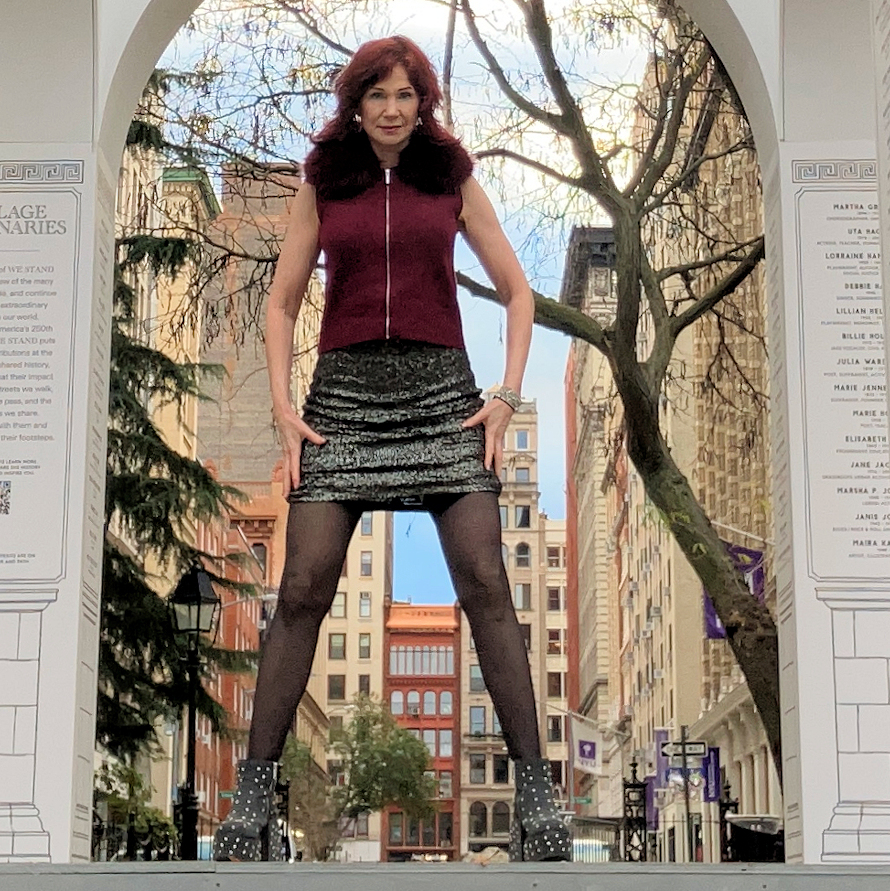
This exhibit is a truly liberating experience! As I thought about what to wear that would be in the spirit of We Stand, I thought about the fierceness of these women, and how they have each expressed their own completely unique selves and gifts in the world. By doing so, they influenced history in a way that has reverberated over the decades and centuries. So I chose to wear something that makes me feel 100% me. When I first spotted this eye-popping sweater at Crossroads Trading, it drew me like a magnet. I slipped it on, and there was no question in my mind. It felt right, and I had to have it! I happily discovered later that the fur collar is detachable (thank you Andrea!)—it is too hot for all-day indoor wear—and I have worn this to work many times as one of my favorite tops with black jeans.
I discovered the skirt at Reminiscence when I had “fall wardrobe” on my mind. I browsed their skirt rack and came away with three skirts, each priced around $20! This pairs so well with the maroon sweater and black tights that it has become another favorite office outfit for those days when I am feeling especially fine. What I love about this outfit, completed with these awesome platform moon-and-star boots, is that I feel fierce and alive—strong and beautiful, but not trying to gain power through seduction (not that there’s anything wrong with that!). Totally the spirit of We Stand.
What I Wore
- Maroon cashmere sleeveless sweater with faux fur collar and silver front zip. Crossroads Trading, 47 W. 13th St.
- Metallic sequined skirt. Reminiscence, 74 5th Ave. (See Reminiscing.)
- Anthony Wang Ocho Toros reflective moonstar platform boots. Buffalo Exchange, 114 West 26th Street.
- Anna Polan burgundy velvet coat worn in one photo. Lincoln Center’s Autumn Crafts Festival (CraftNewYork) outdoor market, circa 2015.
This story first appeared in Chelsea News and other papers in the Straus News group. To learn about British Columbia’s visionary artist Emily Carr (coming soon), subscribe to my Substack.