
All the jazzcats in New York City love when April rolls around. The Smithsonian declared April to be Jazz Appreciation Month in 2001, and we always amp things up a notch here in the undisputed jazz capital of the world. This April, to celebrate, Village Preservation released one of their wonderful, interactive maps of the Village, and this time it’s all that jazz.
The Village Preservation jazz map is loaded with fascinating information about the jazz clubs, musicians, writers, and recorders of jazz music in the Village, from more than 100 years in the past (the Pepper Pot at 146 W. 4th St., later called Club Chantilly) to a few clubs and people that are still around today.
Shout out to Juan Rivero, who created this map. He told me it took him almost two years to put it together. What a tremendous resource for our community. Thank you, Juan!
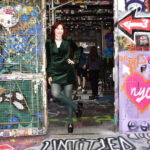
I took my crew on a short bop through the West Village one sunny Saturday afternoon to visit five locations from the map, plus a few unexpected spots that weren’t on my self-guided tour. As so often happens when I hit the streets with my crew, interactions with passersby was a major part of the fun. It was the first warm Saturday of the season, and people were giddy with joy and perhaps tipsy from boozy brunching at all the outdoor cafes.
Columbia Records
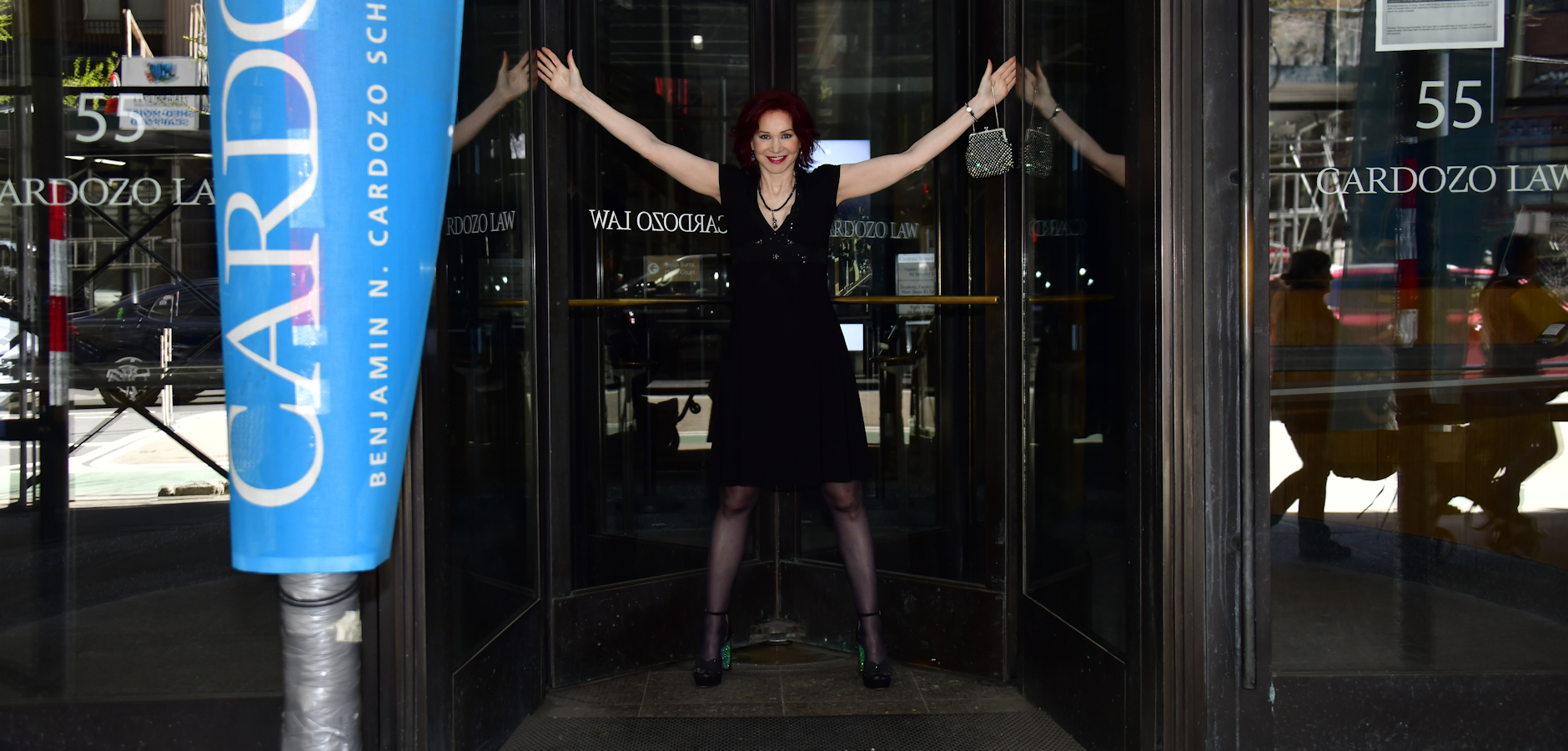
Our first stop was 55 Fifth Ave., home of the Columbia Phonograph Company (1926-1934), now known as Columbia Records. (The location is now the well-emblazoned Cardozo Law School, as you can see.) Here, legendary record producer John Hammond produced recordings that advanced the careers of major jazz musicians and helped break the color barrier in the industry. His momentous recordings included the first sessions by Billie Holiday, whom he discovered singing at a Harlem speakeasy, and the first major hits by a young Benny Goodman.
John Hammond
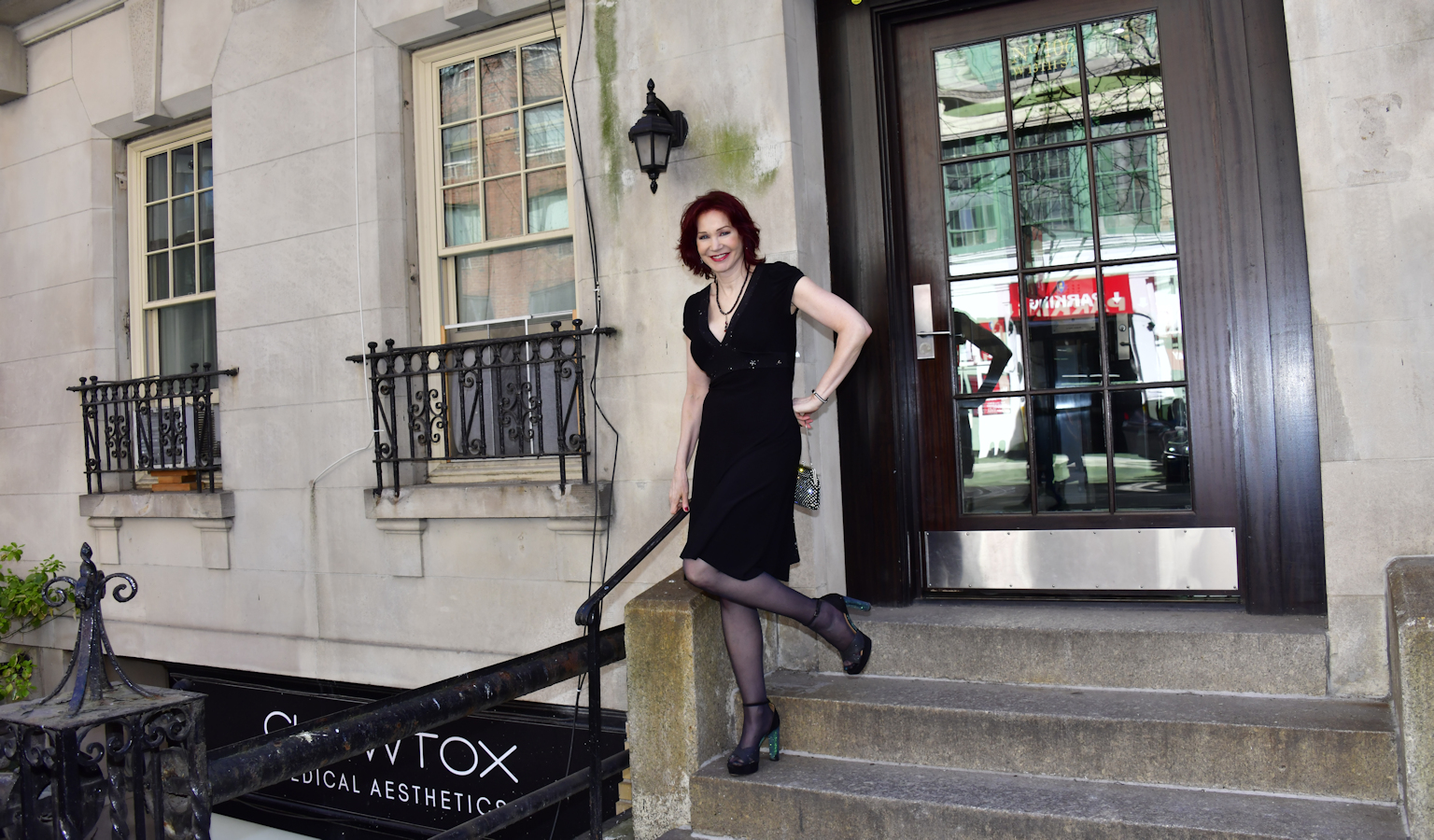
Our second stop was 106 W. 13th St., home of John Hammond (1910-1987), one of the most significant nonmusicians in jazz history. A talent scout, producer, promoter, and music critic, Hammond was a driving force behind the racial integration of the music industry during the 1930s. He saw Bessie Smith perform in Harlem, and this inspired his career in music. He helped launch the careers of several generations of major musicians.
Tour note: We accosted a young man coming out the Glowtox Medical Aesthetics establishment in the basement suite of this location, and he affirmed that he had received excellent care there.
Unscheduled Pit Stop
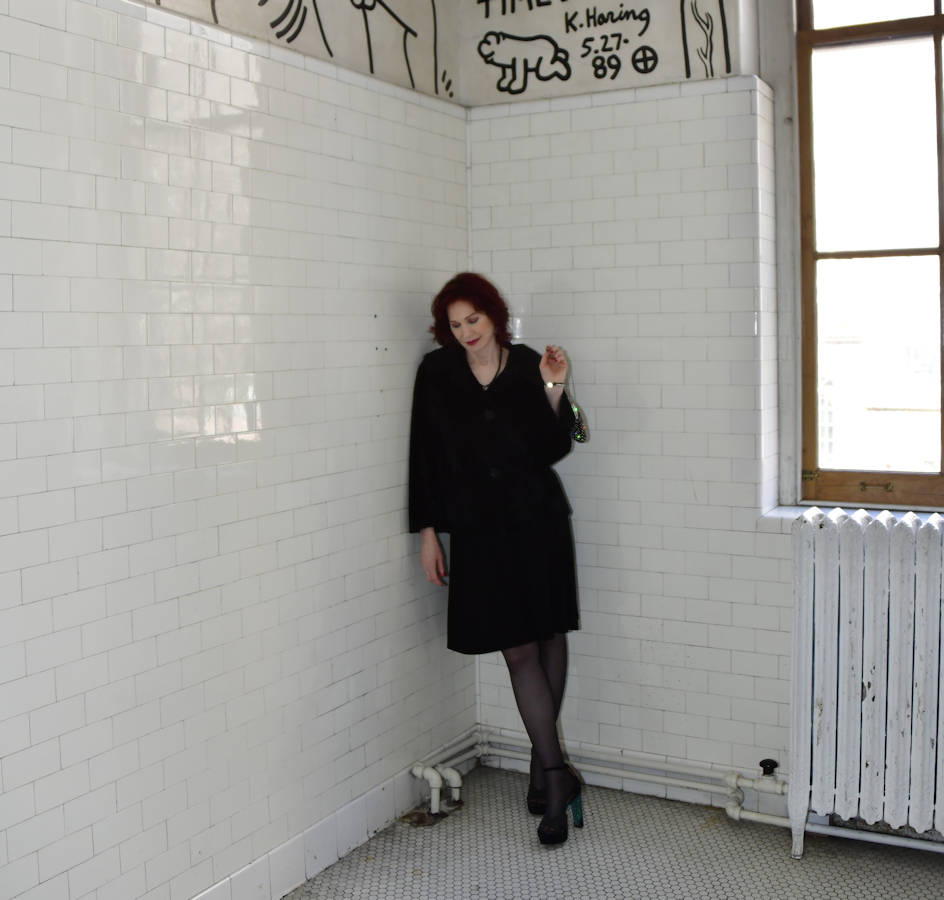
Tour note #2: While waiting for the light to change at Sixth Avenue, we met a cute guy who was on his way to the bookstore at the LGBT Community Center on W. 13th St. After viewing John Hammond’s stoop, we continued along W. 13th St. to the Community Center. There we stumbled into the Keith Haring Bathroom—an immersive mural that Haring painted just before he died. Chatting in a urinal is definitely a West Village thing to do, and here we met more cute guys.
Sheridan Theatre
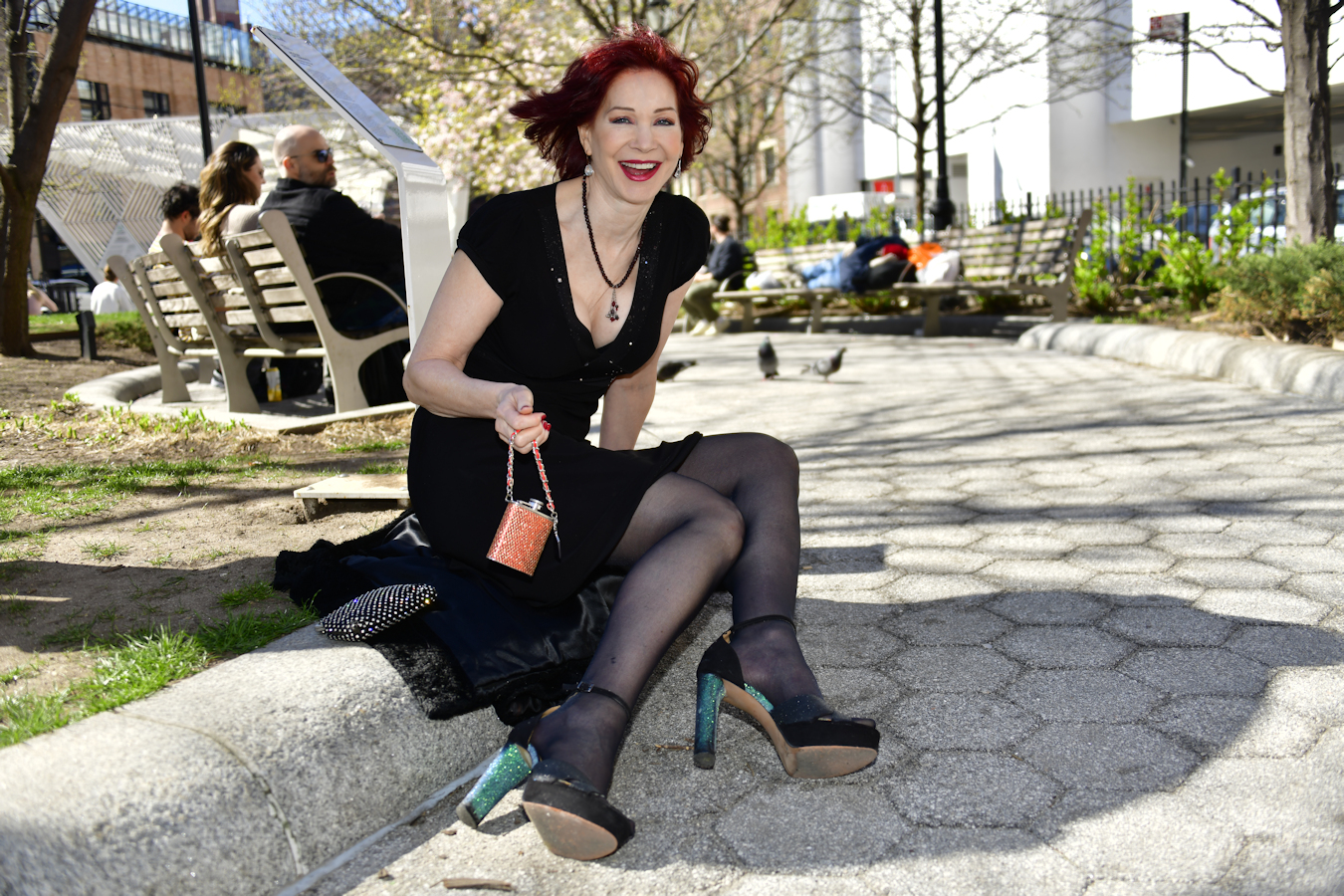
Our third stop was 200 W. 12th St., former location of the Sheridan Theatre (1921-1969), the first motion picture theatre south of 42nd Street. Edward Hopper captured the mood of the palatial, 2,500 seat structure and sumptuous interiors in his 1937 piece “The Sheridan Theatre.”
In 1957, departing from films, the theatre launched a series of jazz concerts called “Music for the People.” The first concert, headlined by Billie Holiday and featuring the Modern Jazz Quartet, the Charles Mingus Quintet, and the Randy Weston Trio, filled the place to the rafters.
Sheridan Theatre declined in the years that followed and closed in 1969. St. Vincent’s Hospital then acquired the site and demolished the landmarked building to make way for a nursing home. This was also demolished, and the site is now the NYC AIDS Memorial Park at St. Vincent’s Triangle.
The Village Vanguard
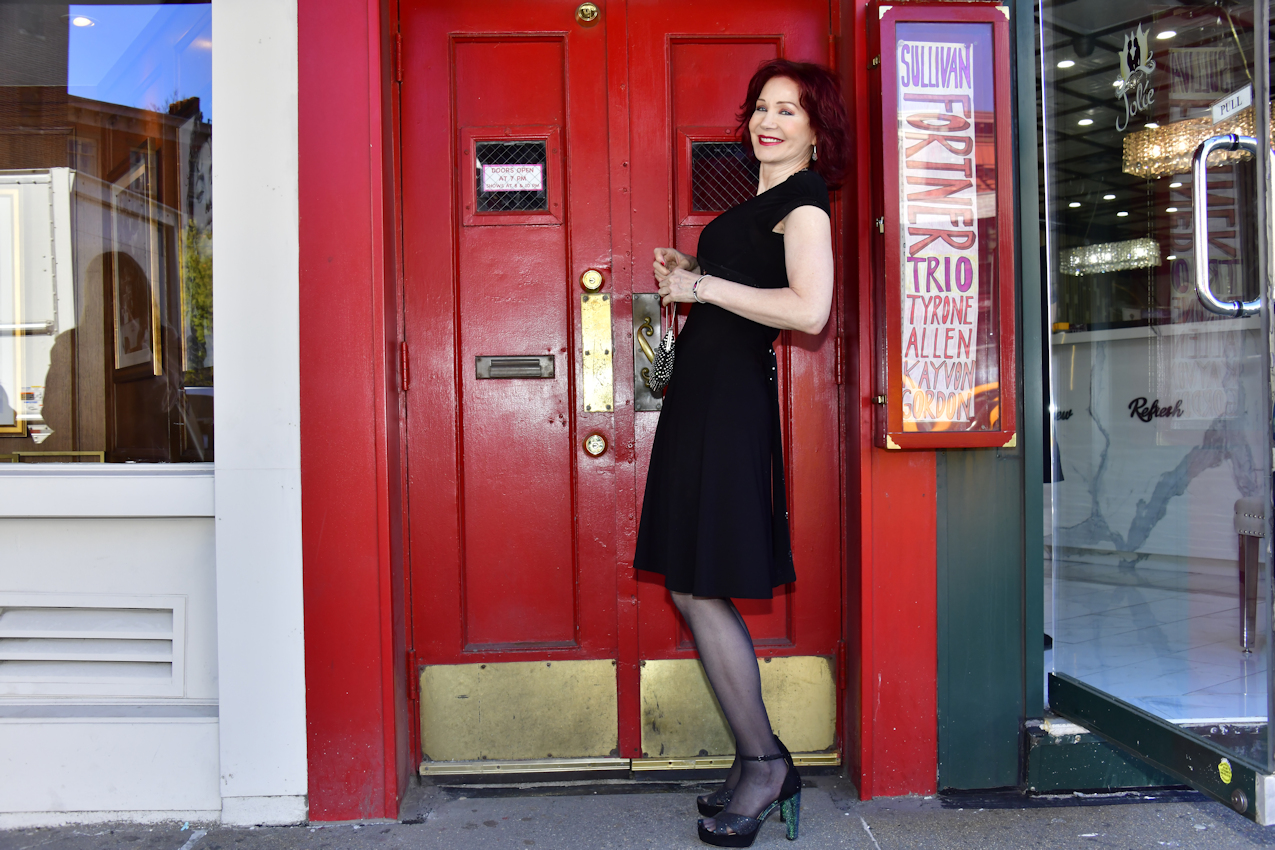
Our fourth stop was the aptly named Village Vanguard—a nightclub that is synonymous with jazz. This is the only stop on our Saturday jazz tour which is still extant and very much a part of the vibrant jazz scene in the Village. Established in 1935 by Belarusian immigrant Max Gordon, the Vanguard became an exclusively jazz venue in 1957 due to the influence of his wife, Lorraine Gordon. According to her fascinating New York Times obituary, she fell in love with jazz as a teenager in the 1930s, listening to it on WNYC radio. The music pierced her soul, she said, “like a spike in my heart.” Amen, sister.
More than 100 albums have been recorded live there in the acoustically tremendous triangular room, including landmark sessions by Bill Evans, Sonny Rollins, and John Coltrane. Check out this 1961 recording of “Gloria’s Step” by the Bill Evans Trio, on the album Sunday at the Village Vanguard. I must have heard this on late night radio hanging out in the ether before I was born, because this seems like it has lived in my heart since the day of my first breath.
Tour note #3: The Village Vanguard is the place I go for the late Sunday night set when I’ve flown back to New York from a trip, to get grounded and know I’m home again. It’s the place I go when I want to sink into the darkness and let the colors of my inner vision open up with the music. It’s the place I celebrated my 50th birthday, and the next, and the next (with Ravi Coltrane on sax, David Virelles on the ivories, Dezron Douglas on bass, and my friend Johnathan Blake on drums, year after year during the October week of my birthday). It’s the place I was most crushed to lose during the pandemic.
I wrote this piece about the triumphant day the Vanguard reopened virtually in June 2020. I raced over to Seventh Avenue to interview the jazz supergroup of musicians (Billy Hart, Ethan Iverson, Mark Turner, and Ben Street) after their livestreamed performance and get their thoughts on what it was like to perform at the Vanguard without an audience.
Blossom Dearie Residence
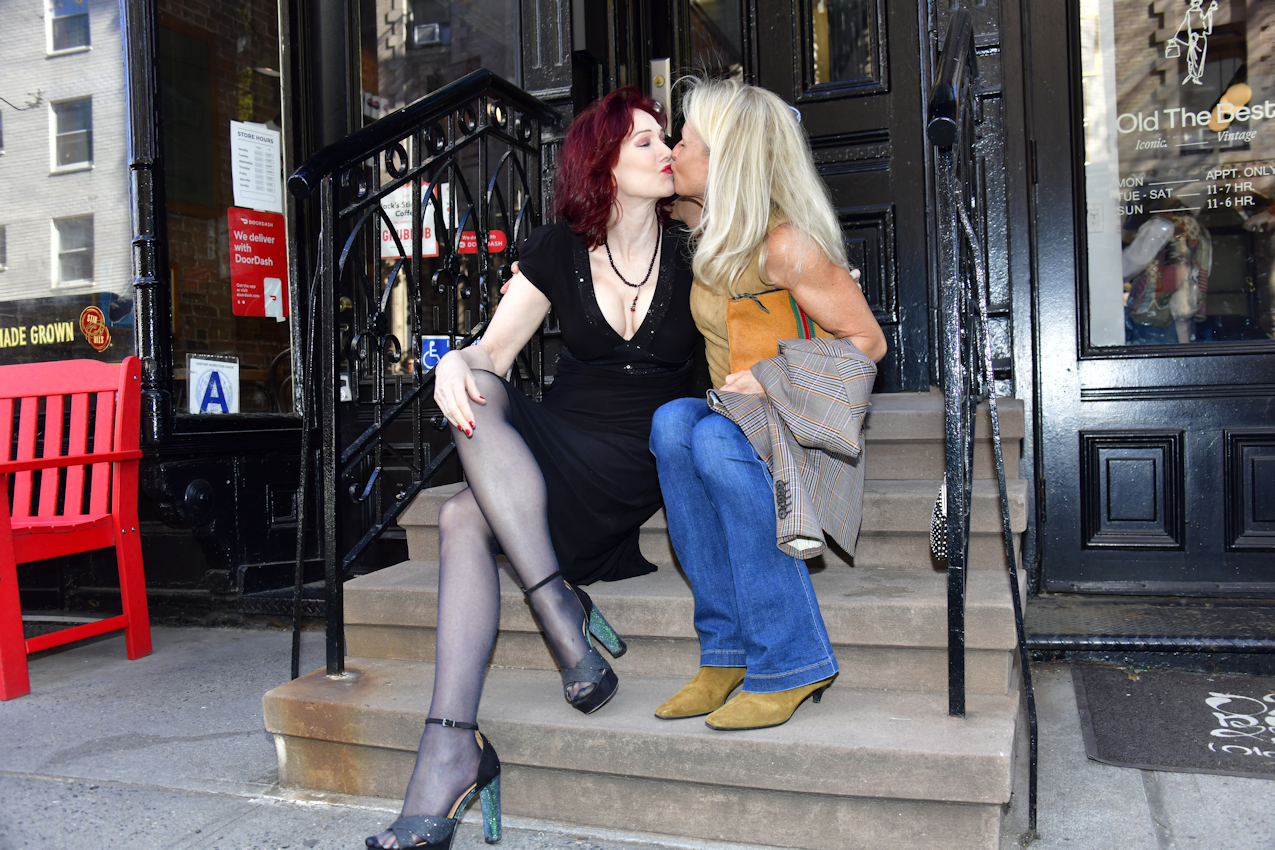
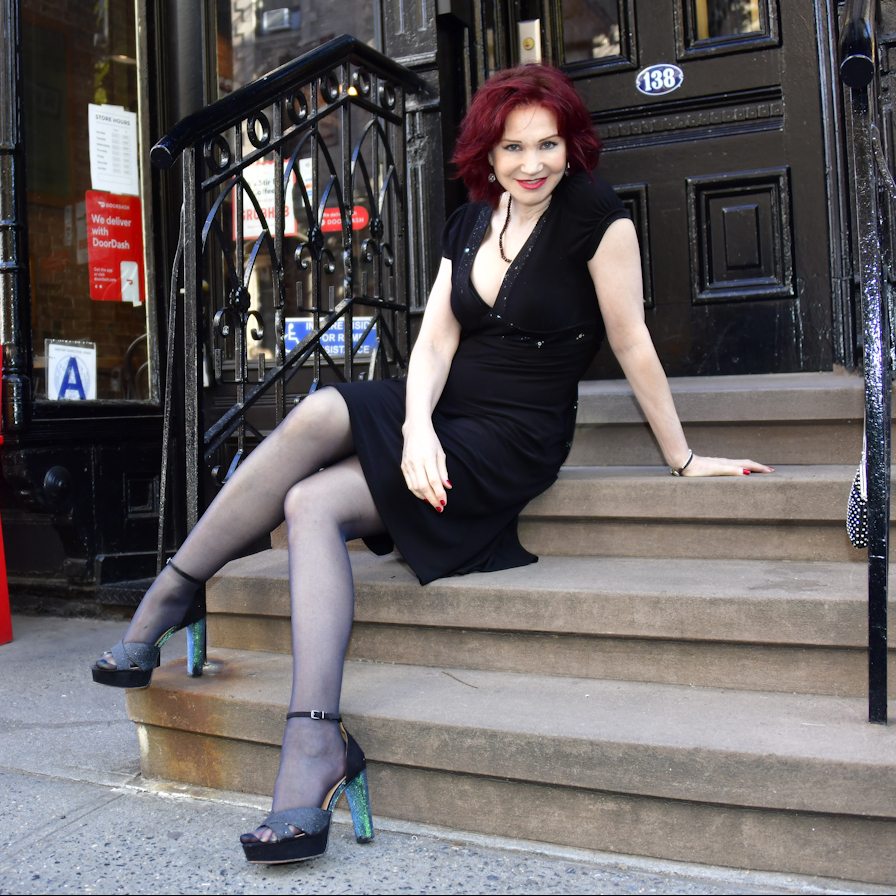
Our fifth and final stop on the tour was 138 W. 10th St., the former home of distinctive jazz pianist and vocalist Blossom Dearie (1924-2009). A classically trained pianist who began playing at age five, Dearie recalls finding her voice in 1950, when she started doing solo sets at Club Chantilly (146 W. 4th St.). She was invited to perform and record in Paris, where she remained for five years. When she returned to the United States in 1957, Dearie recorded her self-titled American debut.
By the 1960s, she was an established artist, sharing the bill at the Village Vanguard with the likes of Miles Davis, who reportedly said, “She’s the only white woman who ever had soul.” Indeed, throughout her career, Dearie was considered a “musician’s musician.” Bill Evans said when he heard Dearie’s use of fourths in chord voicings it really knocked him out. She was one of his models of piano playing.
In 1974, Dearie launched Daffodil Records, becoming the first woman to launch a successful record label in the United States. She remained an active performer and recording artist through 2007, and passed away peacefully at home two years later. Recommended listen: Manhattan. Ann Hampton Callaway wrote this tear-inducing homage to Blossom Dearie in JazzTimes.
Tour note #4: When we got to Blossom Dearie’s stoop, a group of happy brunchers asked if we needed any more models. They went into the Old the Best Vintage Boutique, and I was sitting on the stoop between Jack’s Coffee and the boutique. Suddenly one of the women from the brunch party came out of the boutique, leaned over the railing, and kissed me. My photo-pimp Phil invited her to sit with me on the stoop for another smooch. I think love was definitely in the air that spring day, floating like Blossom’s petals drifting from the trees.
Smalls
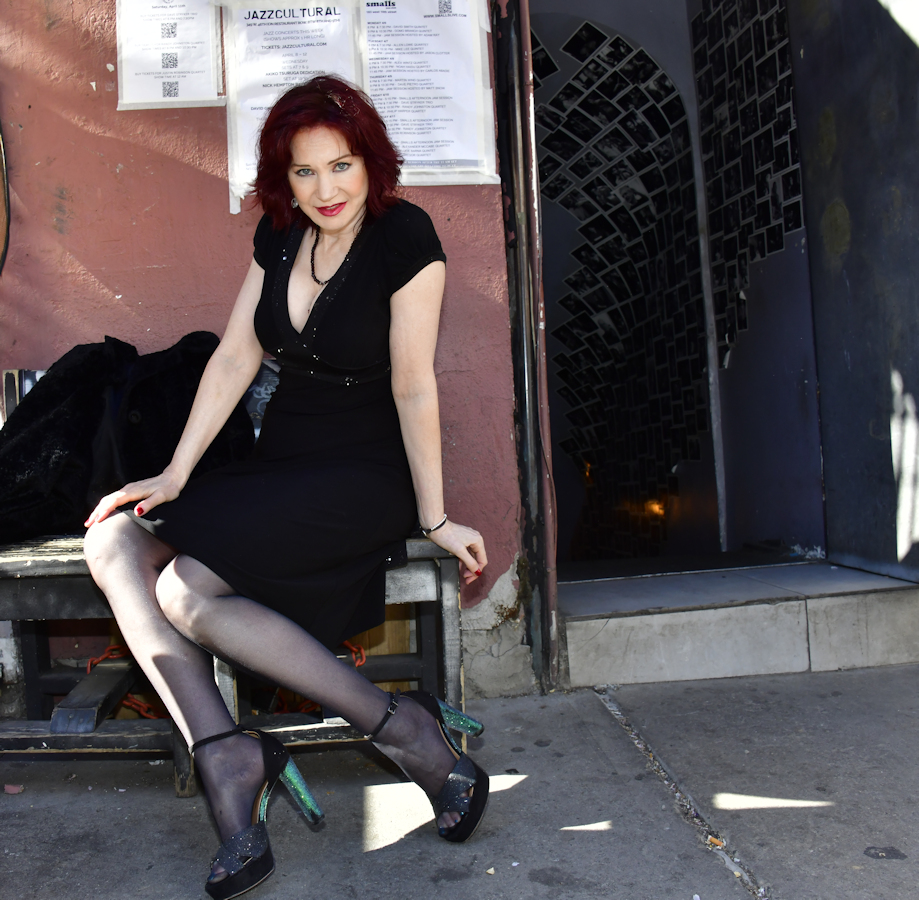
Since we were steps away from the iconic Smalls at 183 W. 10th St., we finished the tour there. It’s a bit of an oversight that Smalls is not on the Village Preservation map, with its 32-year history and major contribution to the jazz scene in the Village. I wanted to introduce Amy and Phil to the club as they’d never been.
Tour note #5: When we arrived at Smalls, a couple of guys were hanging out at the entrance. We got to chatting, and I learned they were both musicians who had been playing at the afternoon jam session. (Smalls has jams on Friday, Saturday, and Sunday, 2 p.m. to 5:15 p.m.). I told Steven and Saul about our jazz tour, and they agreed that it was a travesty that Smalls was not on the jazz map.
Steven Blane, an accomplished singer-songwriter, said that when you enter Smalls, “You’re transported.” Recalling Smalls’ opening in 1994, guitarist Saul Rubin said, “Smalls has always been the most important cultural center for jazz in New York since then. Because it’s a musician’s place.” Smalls has a sister club, Mezzrow which, is across Seventh Avenue on W. 10th St. Saul told us that the owner had just opened a new club called Jazzcultural, which he says is incredible.
A week after we spoke, the Saul Rubin Zebulon Trio headlined at Smalls. To get a flavor, check out the Live at Smalls video of the evening. You might also enjoy this profile of Smalls owner Spike Wilner that I wrote on the occasion of Smalls’ 25th anniversary.
New Hell’s Kitchen Club: Jazzcultural
Smalls owner Spike Wilner’s new club, Jazzcultural, is located at 349 W. 46th St. Jazzcultural is dedicated to the spirit of pianist and educator Barry Harris and his legacy, to jazz music, and to the jazz community. The club has a music room and a café, with reserved seating in the 90-seat state-of-the-art performance studio and drop-in seating in the café. The Jazzcultural café/bar opens at 12 noon and there is no music charge to enter until 6 p.m.
If you are a fellow jazzcat, try out the Village Preservation jazz map to learn more about the fascinating history of jazz in the Village. You never know who you might meet (and kiss) when you embark on your own self-guided jazz tour.
A shorter version of this story first appeared in Chelsea News and other papers in the Straus News group.
Style Notes
What do you wear for a Saturday afternoon jazz crawl in the West Village? I painted my nails and lips red, and pulled this slinky black dress from the back of my closet. These Jessica Simpson 40s-style strappy platform sandals complete any look and are actually quite comfortable for walking the streets. You might notice they are embellished with glitter and rhinestones by the author. I will offer a free cocktail to anyone who identifies which previous column/persona I decorate these shoes for!
Blossom Dearie was an unexpected gem CD I picked up on a whim. That was the start of a whole new appreciation for the world of jazz! It’s become one of my favourite musical genres.
I’m now inspired to dig through some of my CD collection for a trip down memory lane. Thanks Karen, you always inspire one way or another!
Dear Bruce, that’s wonderful to hear that Blossom was also your gateway into jazz! (Like Liessi from BC.) Mine was Billie Holiday. Sophisticated Lady…
When I started getting more interested in jazz, I picked up a few CDs at that record store on Commercial Drive that was near your antique store–they advised me on what to get. I had a few friends who were jazz musicians in Vancouver and took in some jazz now and then. Remember the Jazz Cellar? (Closed in 2014.)
But it was moving to New York that really made jazz become the soundtrack of my daily life! Literally, as I listen to jazz24.org every day! Ironically, it is a Seattle and Tacoma station!
Thanks as always for reading and sharing, Bruce! I am happy to hear your story!
How do you do it?! That West Village atmosphere must be an elixir because you get more beautiful with each shared experience. I’ve never been a fan of jazz but after reading your article, I just had to check it out. Blossom Dearie’s smooth ode to Manhattan sure is soothing. Maybe this will be my gateway song.
Dear Liessi, I love that you found a jazz singer you like–Blossom Dearie! I just realized today is International Jazz Day, so it’s especially fitting that it happened today. I hope that indeed, Manhattan will be your gateway song to a new drug–jazz!
And thanks for the compliment too!
I think this article should be linked to the “Jazz Map”! What an invaluable resource you’ve pulled together, QK!–it gathers all those little “jazz knowledge fragments” many of us have in our heads into a coherent whole, telling when this or that Club opened, when things closed, who this performer was in relation to that one…from the ‘Five Spot, to my old favorite Sweet Basil, to the Vanguard, to, Bradley’s, to Small’s (and yes, it is unbelievable and unjustifiable that “Small’s” is not on the “Jazz Map)–your piece brings it all into view–and does us a public service! TY, QK!
Dear Pat, I would love to hear more about Sweet Basil and Bradley’s and all of your memories of jazz in the Village. Please share more!
Thanks so much for letting me know the article resounded with you!!
xx Karen